

AI Data Centers and the Expansion of Industrial Risk
Phase Associates, a leading provider of Environmental Health and Safety (EHS) and Industrial AI Data Center Safety consulting, training, and professional outsourcing services, has acquired the assets of Atlantic Environmental, Incorporated (Atlantic Environmental). Together, these capabilities support organizations navigating the expanding industrial safety and health challenges associated with artificial intelligence data centers.
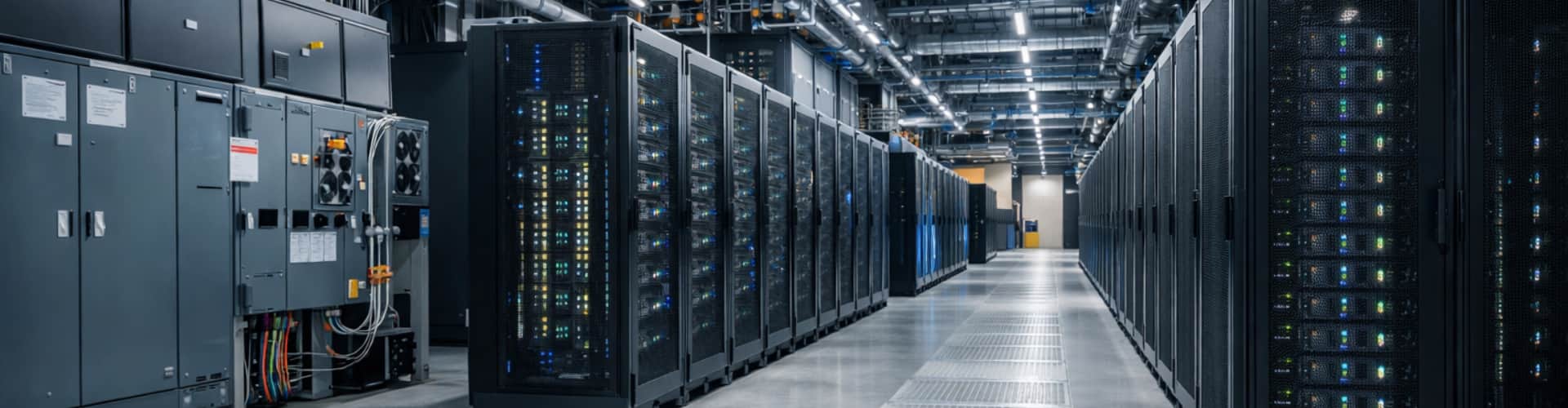
As AI infrastructure grows, data centers increasingly resemble high-intensity industrial facilities rather than traditional IT environments. Extreme electrical loads, advanced cooling technologies, and continuous operations introduce safety, health, and environmental risks that require industrial-grade evaluation standards. Addressing these risks proactively is critical to protecting workers, maintaining uptime, and meeting regulatory expectations.
Why AI Data Centers Are Now Considered Industrial Environments
AI data centers operate at power densities and thermal outputs comparable to manufacturing and energy facilities. High-voltage electrical systems, battery energy storage, liquid cooling infrastructure, and emergency power generation operate simultaneously, often within confined operational footprints.
This convergence of systems creates industrial-level hazards for maintenance staff, engineers, and contractors. Evaluating AI data centers through a purely IT or facilities-management lens is no longer sufficient. Industrial safety methodologies provide the framework needed to assess risk accurately and implement adequate controls.
Industrial Safety Hazards in AI Data Centers
Electrical hazards are among the most significant risks in AI data center environments. Increased amperage, complex power distribution systems, and high-capacity switchgear elevate the potential for arc flash incidents, equipment failure, and thermal overload.
Thermal hazards also intensify as AI hardware generates concentrated heat. Cooling system malfunctions or airflow disruptions can rapidly create unsafe working conditions. Industrial evaluations assess both normal operating conditions and worst-case failure scenarios to ensure worker safety during routine tasks and emergency response situations.
Occupational Health Risks in High-Density Computing Facilities
Industrial AI Data Center safety presents occupational health concerns that extend beyond immediate safety hazards. Continuous noise generated by cooling fans, chillers, and backup generators may exceed occupational exposure thresholds if not correctly evaluated.
Indoor air quality is another critical consideration. Cooling fluids, battery off-gassing, fire suppression agents, and diesel exhaust from generators can introduce airborne contaminants into enclosed spaces. Industrial hygiene assessments help identify these exposure pathways and guide ventilation and mitigation strategies.
Evaluation Standards for Industrial AI Data Centers
Industrial AI data centers operate under overlapping safety, health, and environmental regulatory frameworks. Effective evaluation standards integrate OSHA-aligned workplace safety principles, NFPA electrical safety guidance, indoor air quality benchmarks, and environmental compliance considerations.
Atlantic Environmental applies evaluation standards designed for industrial environments rather than generic compliance checklists. These evaluations account for facility layout, operational intensity, workforce exposure, and geographic location. As AI infrastructure evolves, reassessment ensures controls remain effective as systems expand or operating conditions change.
Industrial Hygiene as a Core Evaluation Tool
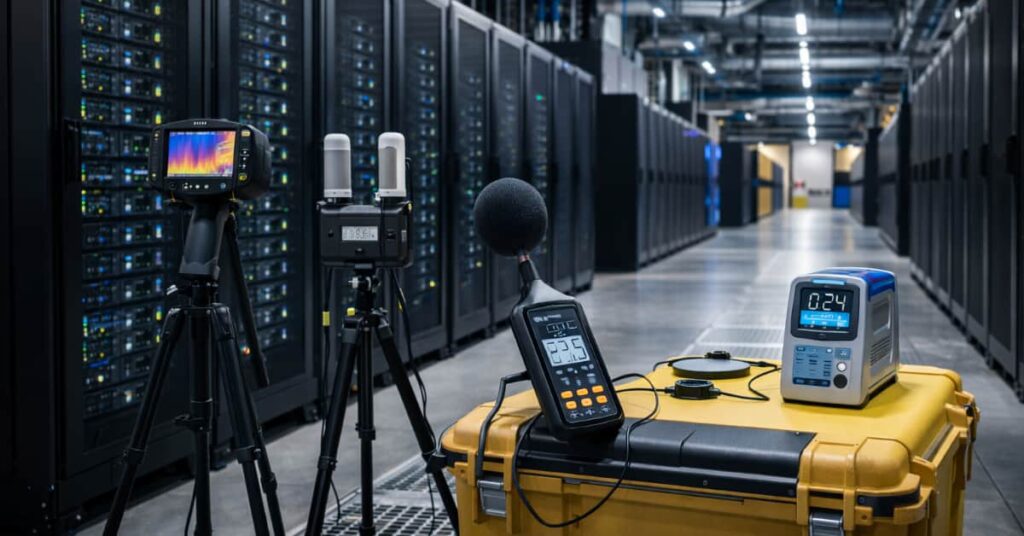
Industrial hygiene is foundational to evaluating AI data center risks. Identifying potential exposures before incidents occur allows organizations to prioritize controls and allocate resources effectively.
Assessments may include noise monitoring, heat stress analysis, air sampling, ventilation testing, and chemical exposure evaluations. Results inform engineering controls, administrative policies, and personal protective equipment recommendations tailored to the facility’s actual risk profile.
For additional perspective on large-scale assessment strategies, The Rise of Modern AI Data Centers & The Safety Risks and Comprehensive EHS & Industrial Hygiene Assessments for AI Data Centers provide complementary insight into these emerging industrial challenges.
Environmental Considerations for AI Infrastructure
AI data centers also introduce environmental risks typically associated with industrial facilities. Backup generators, cooling water discharge, chemical storage, and waste heat emissions may trigger environmental compliance obligations.
Environmental evaluations help organizations understand permitting requirements, emissions controls, and reporting responsibilities. Facilities located in densely populated or environmentally sensitive regions may face heightened scrutiny, making early evaluation and documentation essential.
Emergency Preparedness in Industrial AI Facilities
Emergency preparedness is a critical element of industrial AI data center evaluations. Electrical failures, cooling system breakdowns, fires, or hazardous material releases can escalate rapidly without well-defined response plans.
Evaluations review emergency action plans, system shutdown procedures, evacuation routes, and coordination with local emergency responders. Scenario-based planning identifies vulnerabilities and supports effective response strategies that protect personnel and critical systems.
Workforce Training and Industrial Safety Culture
Industrial evaluation standards extend beyond infrastructure to workforce behavior and training. Employees must understand the unique hazards associated with high-density AI computing environments.
Risk-based training supports safe work practices, reinforces hazard awareness, and strengthens overall safety culture. Atlantic Environmental emphasizes training recommendations aligned with identified risks rather than one-size-fits-all programs.
The Importance of Proactive Industrial Evaluation
Reactive approaches to safety and health management are insufficient for industrial AI data centers. Proactive evaluation strategies help organizations identify emerging risks, document compliance, and support long-term operational planning.
Regular assessments allow organizations to anticipate how expansions, technology upgrades, or load increases may alter risk conditions. This proactive approach supports regulatory confidence, workforce protection, and operational resilience.
Atlantic Environmental’s Role in Industrial AI Data Center Evaluations
Through the acquisition of Atlantic Environmental’s assets by Phase Associates, organizations gain access to expanded industrial safety, health, and environmental expertise. Atlantic Environmental continues to deliver site-specific evaluations that reflect real-world industrial operating conditions.
From initial risk identification through ongoing monitoring and compliance support, Atlantic Environmental helps organizations manage the complex challenges of industrial AI data center operations.
As AI data centers continue to evolve into high-intensity industrial environments, proactive safety and health evaluation is essential. Contact Atlantic Environmental, backed by the expertise of Phase Associates, to schedule an industrial AI data center evaluation tailored to your facility’s operational demands, workforce risks, and regulatory obligations.